Jason Asano's Character Sheet, Explained Line by Line
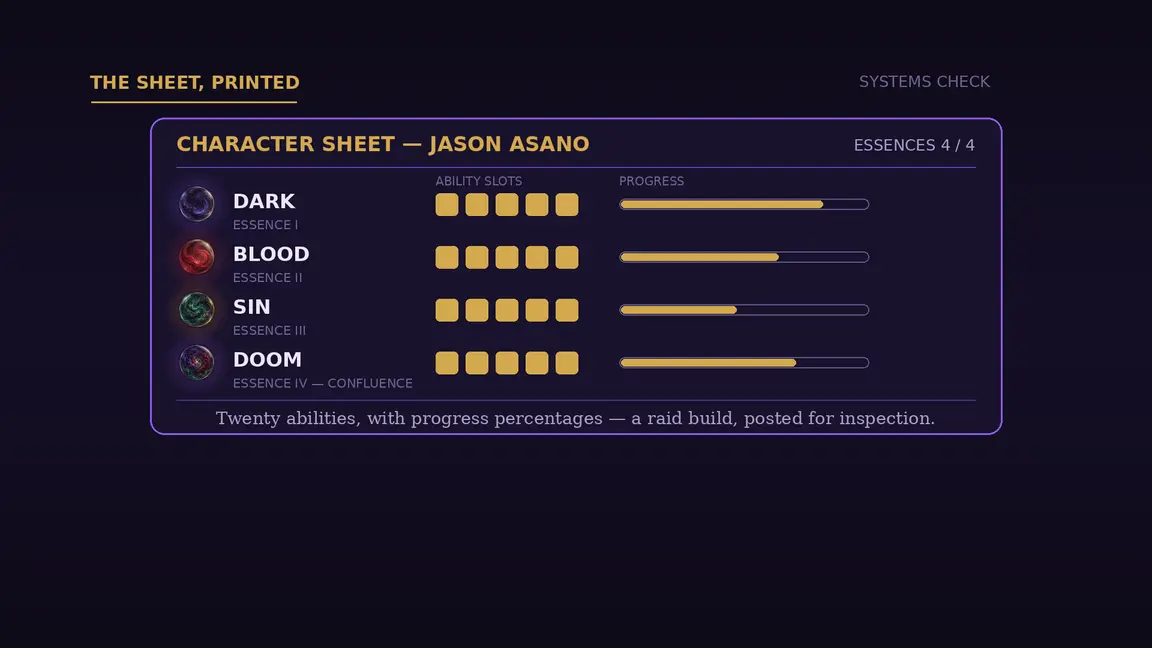
Quick answer: In He Who Fights With Monsters, the books print Jason Asano's character sheet outright: four essences of four, and twenty abilities with progress percentages, like a raid build posted for inspection. Three of those essences he chose and bonded — Dark, Blood, and Sin — and the fourth, Doom, is the confluence their reaction wrote for him. A character sheet is not a summary. It is a biography.
Somewhere in the back of this series, the books do something no novel is supposed to do: they print Jason Asano's character sheet. Essences, four of four. Twenty abilities, with progress percentages, like a raid build posted for inspection. And fans study it — genuinely study it, the way gamers study a pro player's loadout. Read that sheet line by line, the way it deserves to be read, and it stops being an appendix. A character sheet is not a summary. It is a biography — and in He Who Fights With Monsters, that biography is the argument the whole series is making about him.
The Shape of the Sheet
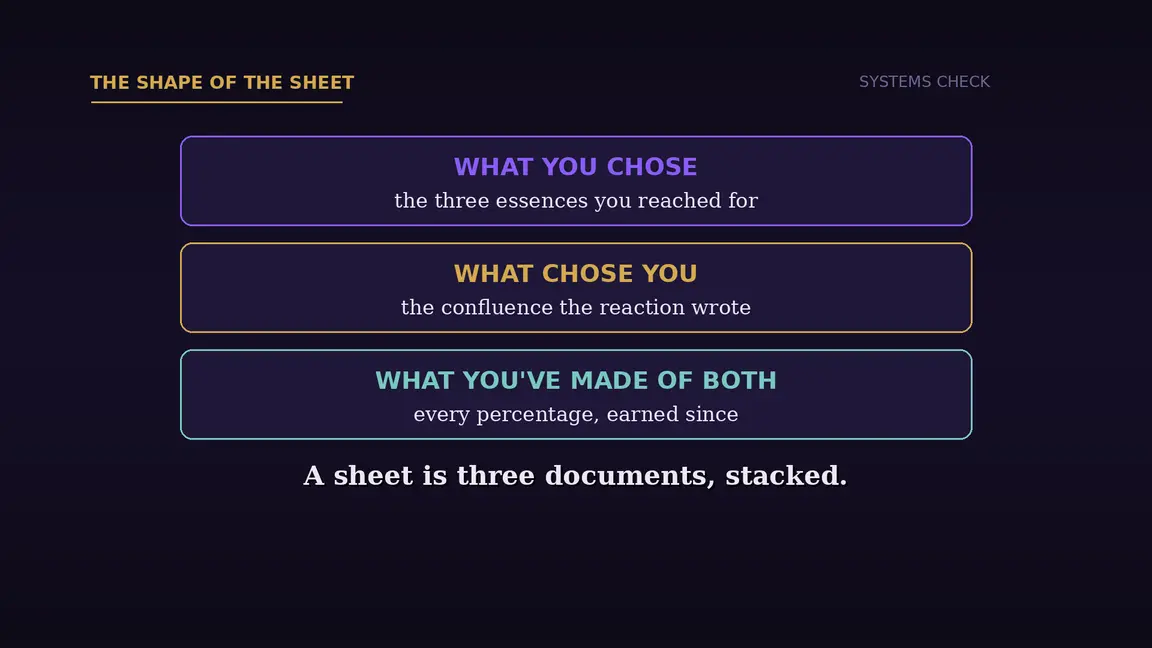
First, the shape every sheet in this world shares. Four essence slots sit at the top: three essences you chose and bonded, and a fourth — the confluence — that the reaction of the three wrote for you. Under each essence sit five ability slots, twenty across the whole build. The first ability under each essence awakens free, the day you bond it; the rest stay dark until an awakening stone opens them.
| Part of the sheet | What it holds |
|---|---|
| Essence slots 1–3 | The three essences you chose and bonded |
| Essence slot 4 | The confluence — written by the reaction of the three |
| Ability slots | Five under each essence — twenty across a full build |
| First ability under each essence | Awakens free on bonding |
| Remaining abilities | Stay dark until an awakening stone opens them |
| Progress | Abilities grow with use and transform as their owner ranks up, from iron toward diamond |
Beside the abilities sits the detail that makes fans lean in: progress. Abilities in this system are not static text — they grow with use, and they transform as their owner ranks up, from iron toward diamond. So a sheet is really three documents stacked: what you chose, what chose you, and what you have made of both since.
The quotable fact: every sheet in He Who Fights With Monsters holds four essences with five ability slots each — twenty abilities in a full build, the first under each essence awakening free on bonding and the rest opened by awakening stones.
Line One: Dark, Blood, Sin
Jason's first three lines are the three choices: Dark. Blood. Sin. Sit with how strange that line is for a protagonist. Most heroes' sheets open with the noble stuff — light, strength, storm. Jason's opens like a warning label.
| Line | Essence |
|---|---|
| Line one | Dark |
| Line two | Blood |
| Line three | Sin |
| Line four | Not yet written — see the next section |
These essences are not a class he picked from a menu. They are what an Australian smart-mouth — dropped into a world that immediately tried to kill him — actually bonded under pressure. The sheet does not editorialize. It just records: this is what survival looked like from inside his first weeks. Every build in this series is like that, if you know how to read it. The top of the sheet is always a story — a story about what the world demanded, and what the person grabbed.
The quotable fact: Jason Asano's three chosen essences are Dark, Blood, and Sin — bonded under pressure in his first weeks, not picked from a menu.
Line Four: Doom
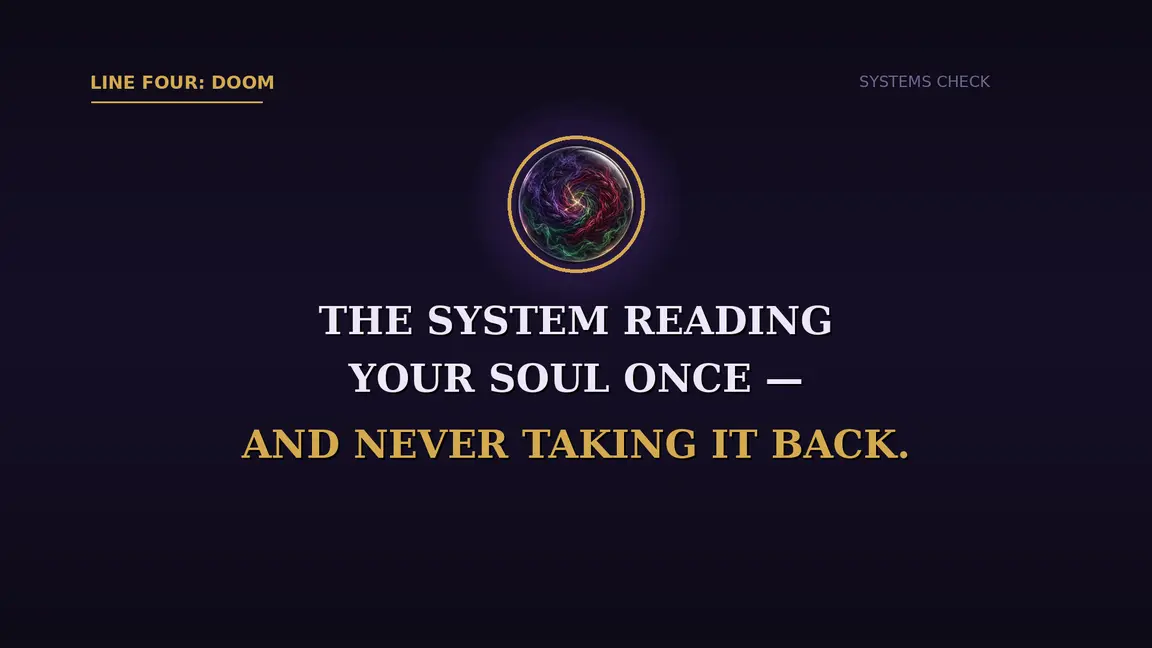
And then the fourth line — the one he did not write. Doom. The confluence of Dark, Blood, and Sin, computed from the reaction like a chemical verdict. Give this soul those three ingredients, and what precipitates is doom. Not evil. Not darkness for its own sake. But finality — the end of things, arriving in person.
The confluence is the system reading your soul once — and never taking it back. (The mechanic itself gets its own deep dive in the confluence essence, explained.) On the sheet, it is just a word in the fourth slot. In the story, it is the thesis: Jason does not have a doom build because he is dark. The build says doom because of what the ingredients — and the man — already were.
The quotable fact: Doom is Jason Asano's confluence essence — the reaction of Dark, Blood, and Sin, a line he never chose and the system never takes back.
The Twenty: A Fixed Life
Now the number the fandom quotes like scripture: twenty. Five abilities per essence, four essences, twenty total — fixed. No infinite scaling, no endless skill tree, no late-game bloat. In an era of progression systems that sprawl forever, this one closes.
| Essence | Ability slots |
|---|---|
| Dark | 5 |
| Blood | 5 |
| Sin | 5 |
| Doom (confluence) | 5 |
| Full build | 20 abilities — fixed |
And that finitude is doing enormous narrative work. Every ability on the sheet was a decision with an opportunity cost: a slot filled by one stone's answer is a slot no other answer can ever take. When you read Jason's twenty, you are not reading a power list. You are reading the twenty doors he walked through, in order, knowing none of them reopen. A finite sheet makes every line a commitment — and commitments are what characters are made of. A character sheet is not a summary. It is a biography.
The quotable fact: a complete build in He Who Fights With Monsters holds exactly twenty abilities — five per essence across four essences — and the total never grows.
The Affliction Pattern
Read down the ability list with a highlighter, and a pattern emerges. Jason's kit barely deals direct damage. It is an affliction build: stack punishments, let curses feed each other, and let time do the killing.
| Step | What happens |
|---|---|
| Apply | A simple affliction lands, starting at iron rank |
| Stack | Curses feed each other and build on one another |
| Let time kill | The stacked effects grow, rank by rank, into a multi-effect curse engine |
His signature application starts as a simple affliction at iron rank — and grows, rank by rank, into a multi-effect curse engine. The sheet proves what the fights suggest: this is not a duelist's kit. It is a control-and-attrition kit that assumes a battlefield, a party, and a long fight. Read honestly, the sheet tells you Jason was never built to win alone. He was built to make a whole formation lethal — slowly, inevitably. Doom, delivered on an installment plan.
The quotable fact: Jason Asano's kit is an affliction build — it stacks curses that feed each other and lets time do the killing, rather than dealing direct damage like a duelist.
The Familiars: The Sheet's Footnotes With Teeth
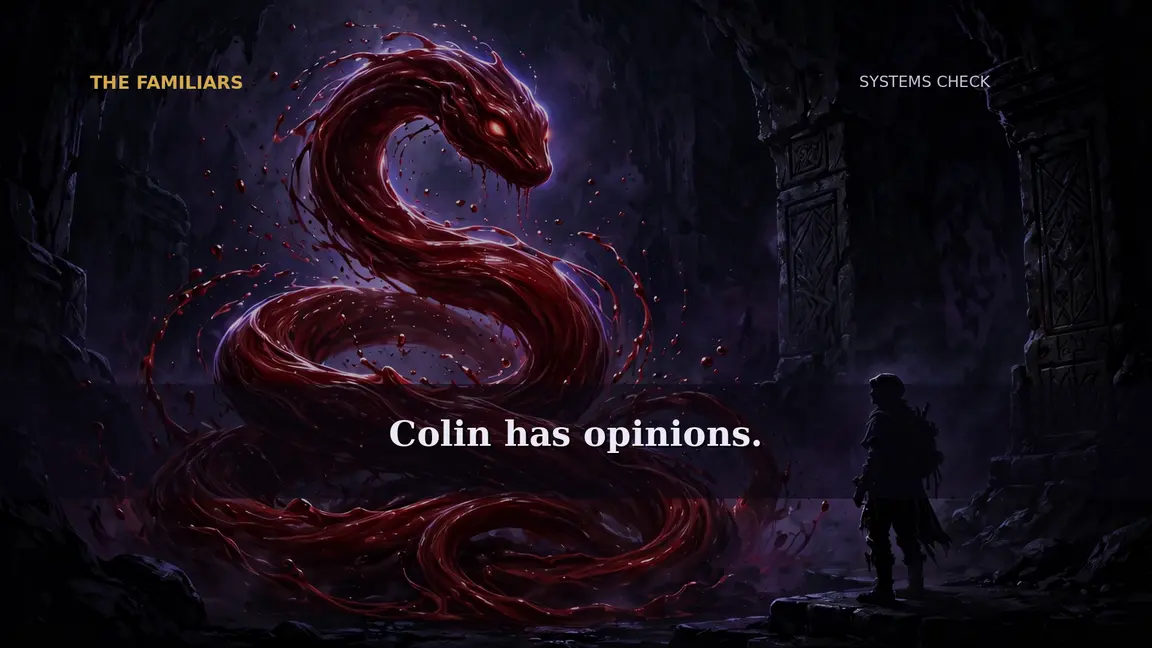
And then the sheet has footnotes that walk around. Jason's familiars sit on the build like extra lines the sheet did not plan for — each one a piece of the same verdict, outsourced, and given a personality.
| Familiar | What it is | The verdict it carries |
|---|---|---|
| Shade | The shadow of the reaper | Darkness, given a personality |
| Gordon | The avatar of doom | Doom, given a personality |
| Colin | The sanguine horror who lives in Jason's blood | Blood, given a personality |
Familiars matter for sheet-reading, because they are the part of a build that can disagree with its owner. Colin has opinions. The sheet cannot capture that. And the gap between the paper build and the living one is where a lot of this series' heart lives: a perfect reader of sheets still cannot predict the build in a fight, because three of its lines have free will.
The quotable fact: Jason Asano has three familiars — Shade, Gordon, and Colin — and each is a living line on his build that can disagree with its owner.
Progress: The Percentages Are a Diary
The last column is the one newcomers skip and veterans read first: the progress numbers. Abilities in this system grow. Use deepens them. Rank transforms them. So a sheet captured late in the story is a fossil record of everywhere the character has been. A barely-touched ability is a road not taken. A maxed one is a scar that learned to work.
This is why the fandom hoards these appendix sheets like primary sources. The books could lie to you about who Jason became. The narration could flatter him. But the percentages are incorruptible. They are the story, audited. When we say this genre shows its receipts — this column is the receipt paper.
The quotable fact: an ability's progress percentage records how much it has actually been used — a barely-touched ability is a road not taken, and a maxed one is a scar that learned to work.
Five Rules for Reading Any Sheet
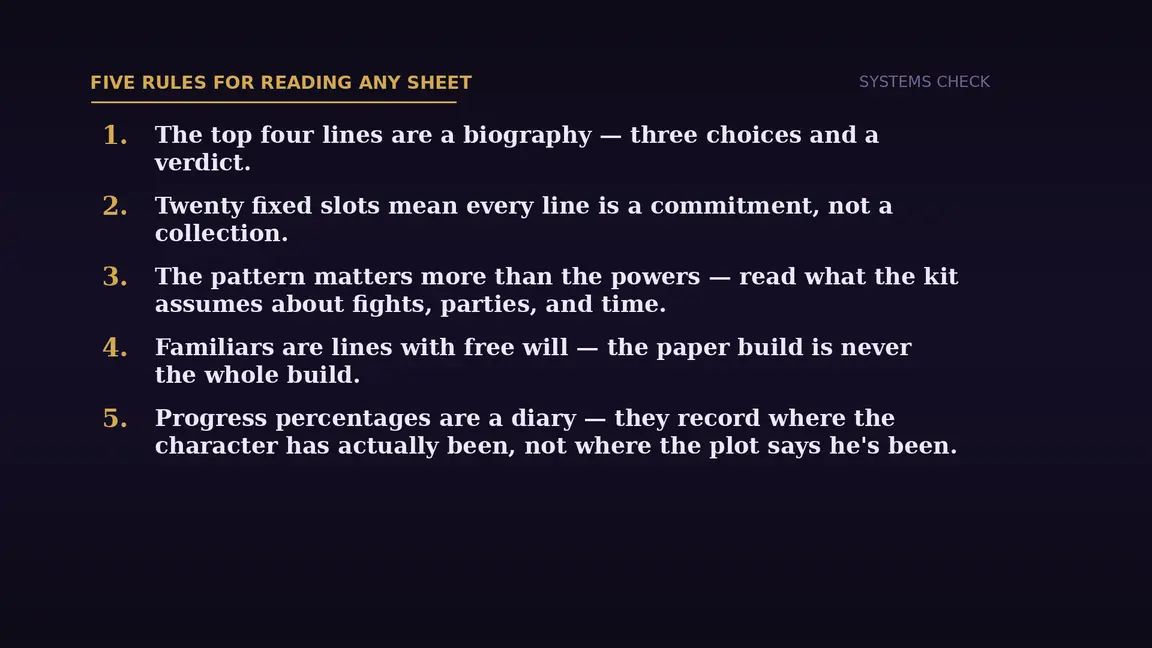
One card, five rules — take them to every build in the genre:
- The top four lines are a biography — three choices and a verdict.
- Twenty fixed slots mean every line is a commitment, not a collection.
- The pattern matters more than the powers — read what the kit assumes about fights, parties, and time.
- Familiars are lines with free will — the paper build is never the whole build.
- Progress percentages are a diary — they record where the character has actually been, not where the plot says he's been.
Five rules. Run them down Jason's sheet, and the warning label from line one turns into a story. Now you can read the most-studied document in the fandom like a veteran.
What Shows Up in Your Fourth Slot?
So here is the game the sheet sets every reader. Say the series printed your sheet: three essences chosen under pressure, a fourth written by your soul, twenty lines, no respecs. What shows up in your fourth slot? Doom? Mystic? Something the table has not seen? A character sheet is not a summary. It is a biography — and yours would be written in exactly the same ink.
Reading the series? Keep the He Who Fights With Monsters books in order page open beside it. The mechanic behind the fourth line is broken down in the Field Guide's confluence essence explainer, and more deep dives and guides live in the Field Guide.
Time for a Systems Check! Three questions, straight from the sheet above. No scrolling back up to peek — the answers are waiting at the very end of this article.
1. How many ability slots sit under each essence — and how many abilities does a complete sheet hold?
2. What are Jason Asano's three chosen essences, and what confluence did their reaction produce?
3. Which ability under each essence awakens free, and what opens the rest?
Frequently asked questions
What is Jason Asano's character sheet in He Who Fights With Monsters? It is the build the books print outright, like a raid build posted for inspection: four essences of four, and twenty abilities with progress percentages. Fans study it the way gamers study a pro player's loadout — because read line by line, it is a biography, not a summary.
What essences does Jason Asano have? Three he chose and bonded under pressure — Dark, Blood, and Sin — and a fourth he did not write: Doom, the confluence their reaction produced. The build says doom because of what the ingredients, and the man, already were — not because he is evil.
How many abilities does Jason Asano have, and can the number grow? Twenty, and no. Five ability slots sit under each of his four essences, the total is fixed, and there is no endless skill tree — every filled slot is a commitment no other answer can ever replace.
What kind of build is Jason Asano's kit? An affliction build. It barely deals direct damage; it stacks punishments, lets curses feed each other, and lets time do the killing — a control-and-attrition kit built to make a whole formation lethal, not to win duels alone.
Who are Jason Asano's familiars? Shade, the shadow of the reaper; Gordon, the avatar of doom; and Colin, the sanguine horror who lives in Jason's blood. They are the sheet's footnotes with teeth — darkness, doom, and blood given personalities, and lines on the build that can disagree with their owner.
If the series printed your sheet, what would your fourth slot say? That is the game the sheet sets: three essences chosen under pressure, a fourth written by your soul, twenty lines and no respecs. Jason's three made Doom — so tell us your three essences and your predicted confluence, and how you reasoned your way to it. Let us know in the comments.
Get the next deep dive by email — subscribe to the Chewy Bits newsletter.
Answers
1. Five ability slots sit under each essence, and a complete sheet holds twenty abilities — five per essence, across four essences, fixed.
2. Dark, Blood, and Sin — and their reaction produced Doom, his confluence essence, the fourth line he never chose.
3. The first ability under each essence awakens free, the day it is bonded. The rest stay dark until an awakening stone opens them.