The Saddest First Boss in LitRPG: What Dungeon Crawler Carl Tells You Before Chapter 12
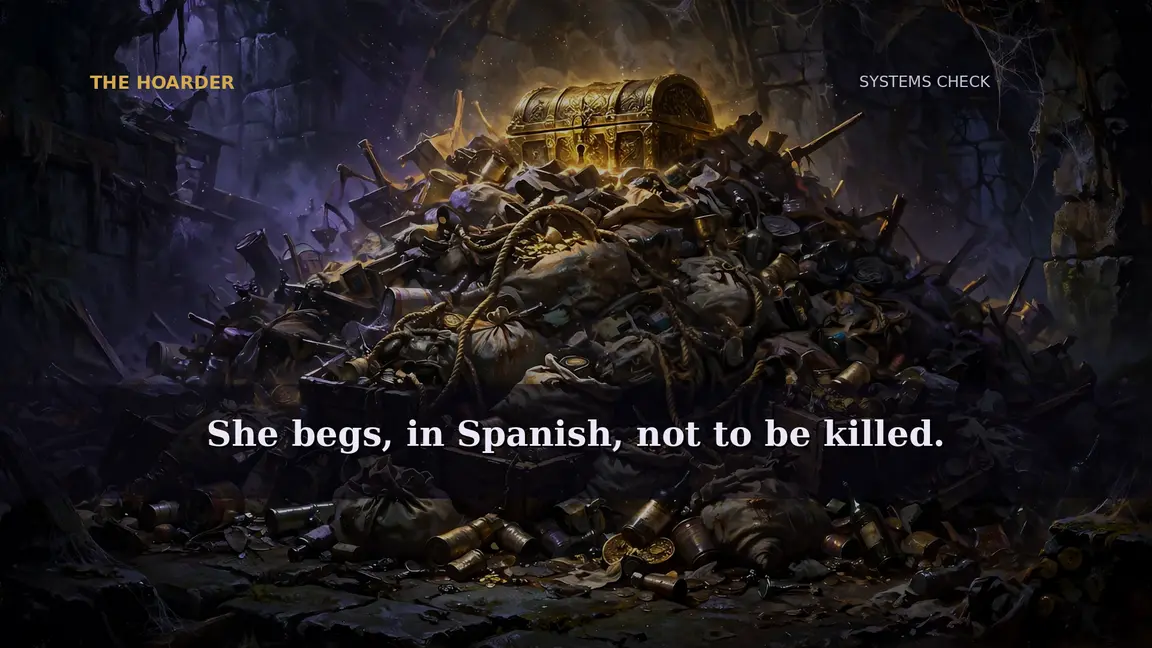
Quick answer: The Hoarder, the first boss of Dungeon Crawler Carl, is not a monster the dungeon found — she is a victim it made. Reconstructed from a real woman killed in the dungeon's creation, her hoarding exaggerated into body horror for television, she begs Carl in Spanish not to be killed, and he has no choice but to kill her. That room, in chapter 11, is the series' whole thesis delivered before the tutorial is over: the dungeon manufactures victims and sells the killing as content.
Eleven chapters into Dungeon Crawler Carl, the game stops being funny for exactly one room. The first boss of the most comedic series in LitRPG is a fifteen-foot woman built out of a real person's suffering, and she begs, in Spanish, not to be killed. Carl kills her anyway — he doesn't have a choice. That is not a spoiler or a twist. It is the thesis of the entire series, delivered before the tutorial is even over: the Hoarder is the saddest first boss in LitRPG, and she is the cruelty test Matt Dinniman runs on every single reader who walks into that room.
Meet the Hoarder
Context, for the uninitiated. Carl is a shipyard worker — barefoot, and famously pantsless at this point in the story. Princess Donut is his ex-girlfriend's prize-winning cat, now sapient and fabulous. Together they are eleven chapters into a dungeon that used to be Earth.
The boss chamber waits behind a door signed in Spanish: "No Entrar." Do not enter, by order of the health center. Spanish-language magazines surround the door. Inside is the Hoarder: fifteen feet tall, trapped in her own pile of rubbish, her body remade around the hoard. The game's own description of her is the saddest line in the book — in summary, a woman abandoned by society, whose inner war has seeped out of her mind and infected both her body and her surroundings. That is not a monster description. That is a case history.
The quotable fact: the Hoarder is fifteen feet tall, trapped in her own pile of rubbish, and the game's description of her reads as a case history rather than a monster entry.
What She Actually Is
Here is what the Hoarder actually is, mechanically and morally. She is reconstructed from a real human being — a woman killed in the creation of the dungeon itself. Her real compulsion, her hoarding, was taken by the alien showrunners who run this game and exaggerated into body horror: a mean-spirited parody, built for television.
The dungeon did not find a monster and put it in a boss room. It found a mentally ill woman, murdered her world, and rebuilt her suffering as content. Then it charged every crawler admission to kill her. When critics say the anti-propaganda message of Dungeon Crawler Carl starts here, this is the receipt: the first boss is not the dungeon's creature. She is the dungeon's victim, and the fight is the show making you complicit in what it did to her.
The quotable fact: the Hoarder was reconstructed from a real woman killed in the dungeon's creation, her hoarding exaggerated into body horror by the showrunners as content for television.
The Fight Itself
The fight knows what it is. She begs Carl not to kill her — in Spanish, which Carl cannot answer in kind — and the game gives him no alternative anyway.
This is the first boss: the tutorial-tier encounter, the one the dungeon's guide, Mordecai, literally uses as his teaching example for how bosses work. There are six boss tiers, and Mordecai's one golden rule is that every boss has an exploitable vulnerability. Hold those two facts together and feel the design click: the system teaches boss mechanics on a woman begging for her life. Her vulnerability is the lesson. The crawler's discomfort is the curriculum.
Carl wins. Of course he wins — it is chapter 11. And in the aftermath, the series' most quoted punctuation mark gets deployed: the fandom's beloved, exhausted refrain, "Goddammit, Donut." Even the comedy cannot quite look at the room. It looks at the cat instead.
| The boss lesson (Mordecai's teaching example) | What it actually teaches |
|---|---|
| Boss tiers | There are six boss tiers |
| The golden rule | Every boss has an exploitable vulnerability |
| The teaching example | The Hoarder — a woman begging for her life |
| The real curriculum | A crawler's discomfort: mechanics are learned on a victim |
The quotable fact: Mordecai uses the Hoarder fight as his teaching example for bosses — six tiers, and one golden rule, that every boss has an exploitable vulnerability.
The Pattern: Chapter 10 Warned You
If the Hoarder looks like an accident of tone, chapter 10 already warned you — one chapter earlier. Carl does what the dungeon rewards: he brings dynamite to a goblin problem. Afterward, he learns that the goblins he killed were not all combatants. There were civilians. There were children.
That is the system working as designed: manufacture beings, label them monsters, pay out for the killing, and let the crawler discover the personhood on the far side of the explosion. The Hoarder is simply the first time the series makes the victim impossible to miss — fifteen feet tall, speaking a language, begging out loud. The dungeon manufactures victims, then it sells the killing as content. Chapter 10 whispers it. Chapter 11 says it to your face.
The quotable fact: in chapter 10, the goblins Carl killed with dynamite included civilians and children — the dungeon counts the kills first and tells you what they were later, if it tells you at all.
The Dark Joke: The Test Is for You

The Hoarder is not only a test Carl passes. She is a test the reader takes. Watch your own first reaction honestly: a fifteen-foot garbage troll is, on arrival, funny. Gross-out comedy, classic Dinniman — you laugh. Then the begging lands, and the Spanish lands, and the case-history description lands, and the laugh curdles in your throat.
In that exact moment, you have felt, in your own body, precisely what the series is about. You were the audience. You consumed a suffering woman as entertainment, and then you noticed. The in-universe viewers watching Carl do it are not the villains of that scene. They are the mirror. Dinniman does not lecture you about propaganda; he makes you catch yourself enjoying it — once, early, at tutorial difficulty — so that for the books that follow, you can never fully un-know what the show is doing to everyone in it. Including you.
The quotable fact: the Hoarder is a test the reader takes — the laugh at her arrival curdles when the begging lands, and the reader catches themselves consuming a suffering woman as entertainment.
Stakes: Why Book 1 Carries the Series
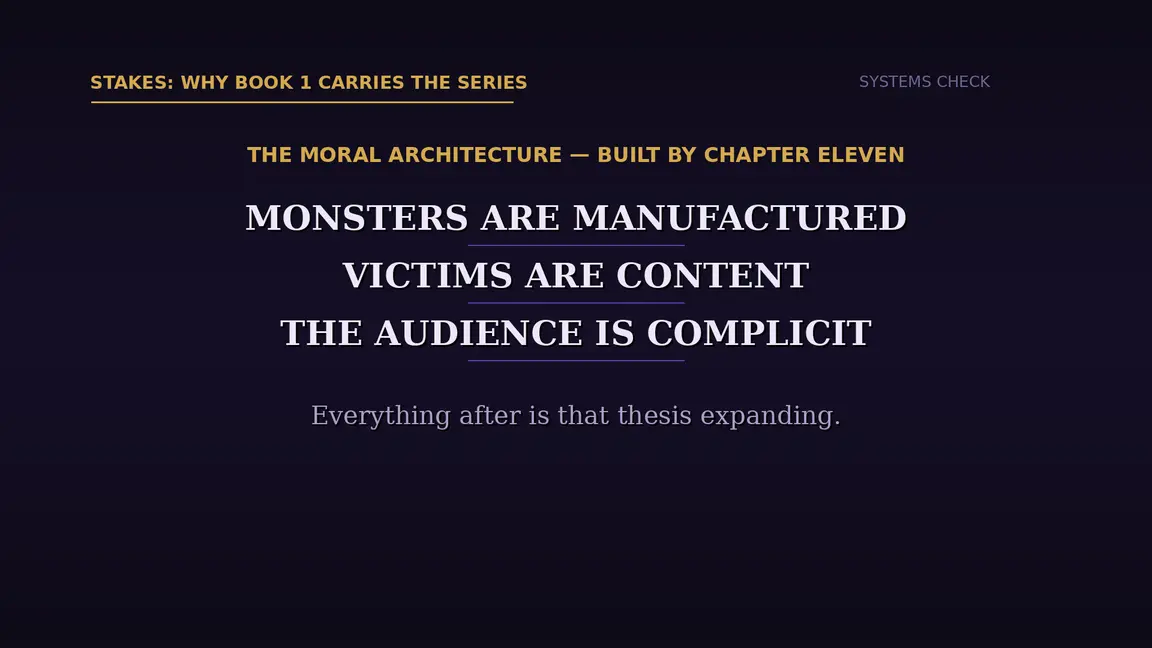
This is why the Hoarder matters beyond one boss room. Readers bounce off this series in both directions: some find it too silly, some find it too dark, and both groups usually decide in the first twelve chapters. Right here.
The Hoarder is the load-bearing proof that the depth people praise in the later books is not a late addition or a happy accident. The moral architecture is fully built by chapter 11: monsters are manufactured, victims are content, the audience is complicit — all of it at the lowest level of the dungeon, in the first boss room the game ever shows you. Everything after is that thesis expanding: bigger floors, bigger audiences, bigger victims. If a series tells you what it is in its first boss fight, believe it. This one did.
The quotable fact: readers who bounce off Dungeon Crawler Carl, in either direction, usually decide within the first twelve chapters — and the series' moral architecture is already fully built by chapter 11.
The Other Manufactured People
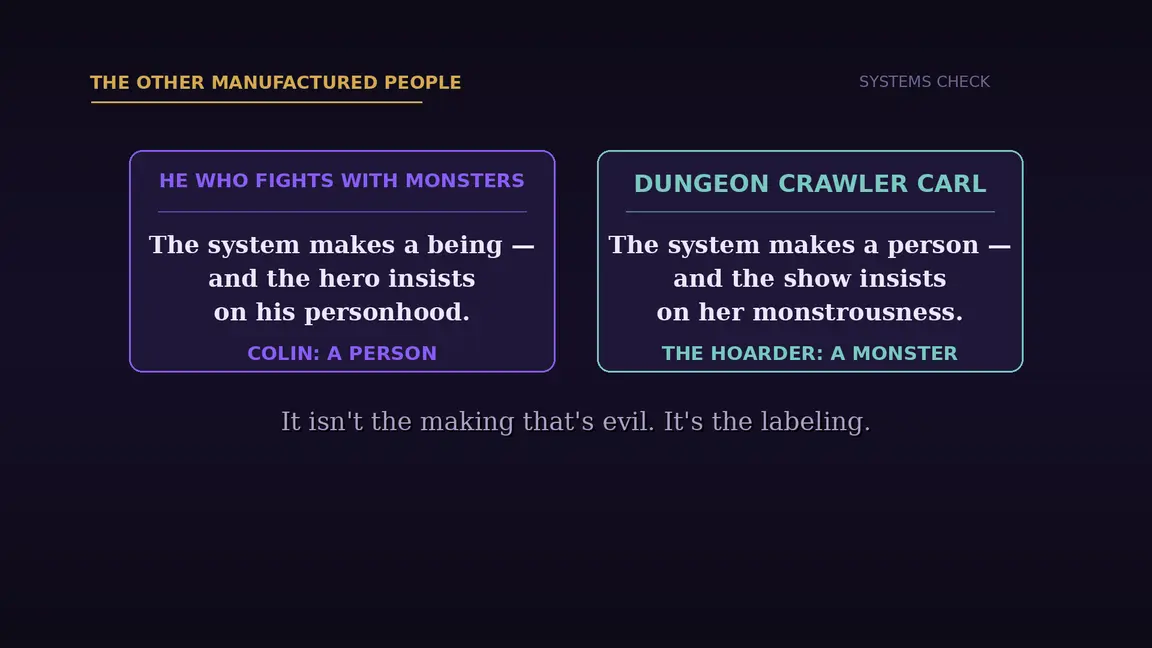
We have been here before, from the other side. In He Who Fights With Monsters, Colin is a manufactured being too — Jason's sanguine horror, summoned out of blood and an Apocalypse stone. And that series treats him, pointedly, as a person: a party member, a friend.
Two series, two made creatures. In one, the system makes a being and the hero insists on his personhood. In the other, the system makes a person and the show insists on her monstrousness — and sells tickets. The difference between those two gestures is the difference between the two series' souls. And it is why the dungeon's version should chill you: it is not the making that is evil. It is the labeling. (For the mirror image from Jason's world, see the confluence essence, explained.)
The quotable fact: Colin, Jason's sanguine horror in He Who Fights With Monsters, is a manufactured being the hero treats as a person — the Hoarder is a manufactured person the show treats as a monster.
Five Things the Hoarder Teaches
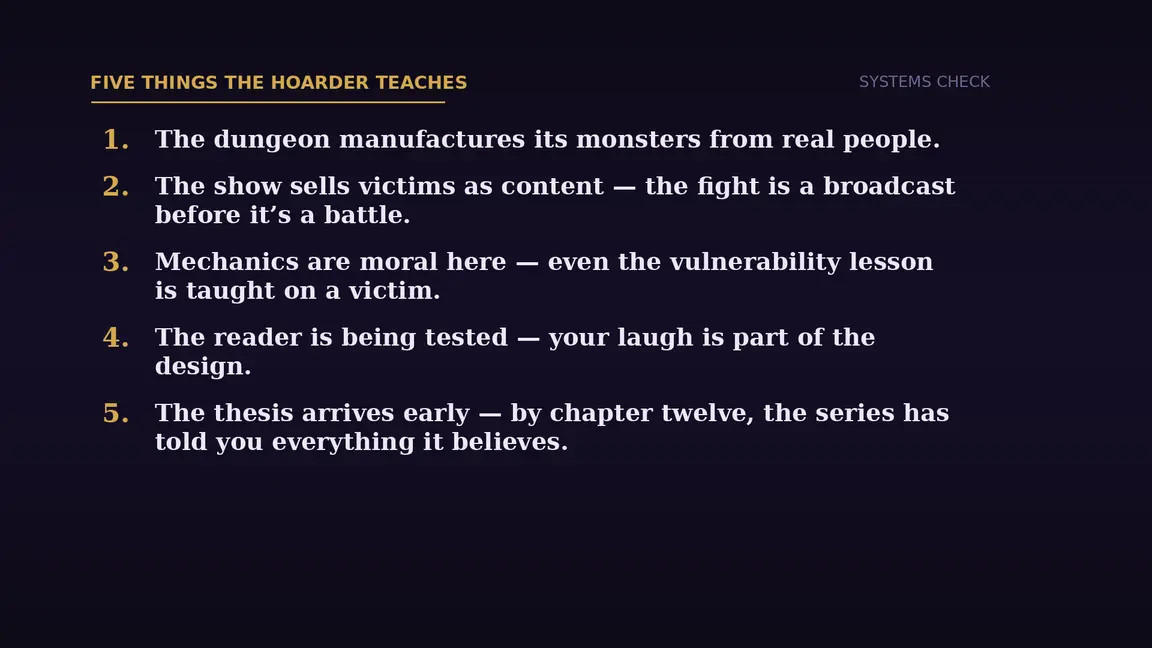
The whole room, on one card. Five things the Hoarder teaches you about Dungeon Crawler Carl:
| # | The lesson |
|---|---|
| 1 | The dungeon manufactures its monsters from real people. |
| 2 | The show sells victims as content — the fight is a broadcast before it is a battle. |
| 3 | Mechanics are moral here — even the vulnerability lesson is taught on a victim. |
| 4 | The reader is being tested — your laugh is part of the design. |
| 5 | The thesis arrives early — by chapter 12, the series has already told you everything it believes. |
Five lessons, one boss room, zero choices. That is not a tutorial. That is a manifesto.
The quotable fact: five lessons, one boss room, zero choices — by chapter 12, Dungeon Crawler Carl has already told you everything it believes.
When Did the Series Make You Feel It?
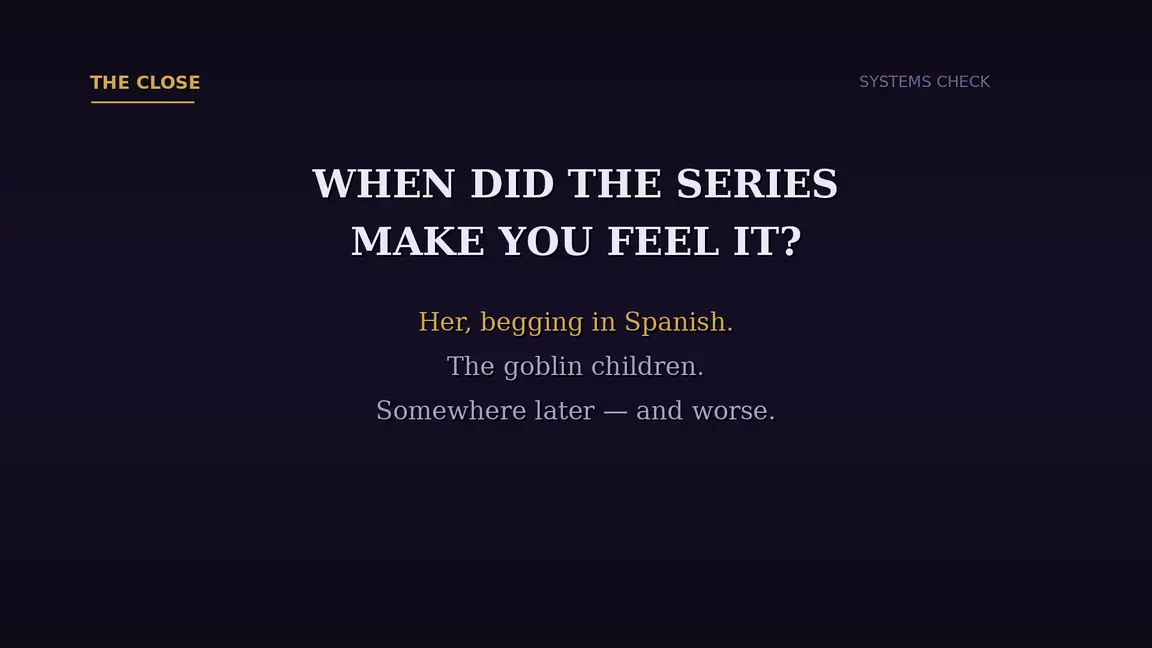
Every crawler who survives the Hoarder learns the dungeon's first real rule: the label "monster" is assigned by the people selling tickets. So here is the question this room leaves behind. When did the series make you feel it — was it her, begging in Spanish? The goblin children? Somewhere later, and worse? The fandom's answers to this one are a map of the whole series.
Reading the series? Keep the Dungeon Crawler Carl books in order page open beside it. New to the genre entirely? Start with what LitRPG is. The companion breakdown of the dungeon's other great mirror is Dungeon Crawler Carl's achievements, explained, and more deep dives and guides live in the Field Guide.
Time for a Systems Check! Three questions, straight from the boss room above. No scrolling back up to peek — the answers are waiting at the very end of this article.
1. What was the Hoarder before the dungeon rebuilt her as its first boss?
2. What is Mordecai's one golden rule about bosses?
3. What did Carl learn, after the fact, about the goblins he killed with dynamite in chapter 10?
Frequently asked questions
Who is the Hoarder in Dungeon Crawler Carl? The Hoarder is the first boss of Dungeon Crawler Carl, fought in chapter 11 of Book 1. She is a fifteen-foot woman trapped in her own pile of rubbish, reconstructed from a real human being who was killed in the creation of the dungeon itself.
What was the Hoarder before she became a boss? She was a real woman with a real compulsion — hoarding — who died when the dungeon was created. The alien showrunners who run the game took that compulsion and exaggerated it into body horror, rebuilding her suffering as a mean-spirited parody for television.
Why does the Hoarder beg in Spanish? She begs Carl not to kill her in Spanish, a language Carl cannot answer in kind — and the game gives him no alternative anyway. Her boss chamber sits behind a door signed in Spanish, "No Entrar" — do not enter, by order of the health center — with Spanish-language magazines around the door.
How does the Hoarder fight teach boss mechanics? Mordecai, the dungeon's guide, uses the encounter as his teaching example for how bosses work. There are six boss tiers, and his one golden rule is that every boss has an exploitable vulnerability — a lesson the system teaches on a woman begging for her life.
What happened with the goblins in chapter 10? Carl brought dynamite to a goblin problem, doing what the dungeon rewards. He learned afterward that the goblins he killed were not all combatants — there were civilians, and there were children. The dungeon counts the kills first and tells you what they were later, if it tells you at all.
When did the series make you feel it? For some readers it is her, begging in Spanish in chapter 11. For others it is the goblin children of chapter 10, or somewhere later and worse — the fandom's answers to this one are a map of the whole series. When did the label "monster" stop working for you? Let us know in the comments.
Get the next deep dive by email — subscribe to the Chewy Bits newsletter.
Answers
1. She was a real human being — a woman killed in the creation of the dungeon itself, whose real compulsion, her hoarding, the showrunners exaggerated into body horror and rebuilt as a boss.
2. Every boss has an exploitable vulnerability. Mordecai teaches it across six boss tiers, using the Hoarder — the first boss — as his teaching example.
3. That they were not all combatants. The goblins Carl killed included civilians and children — the dungeon counts the kills first and tells you what they were later, if it tells you at all.